
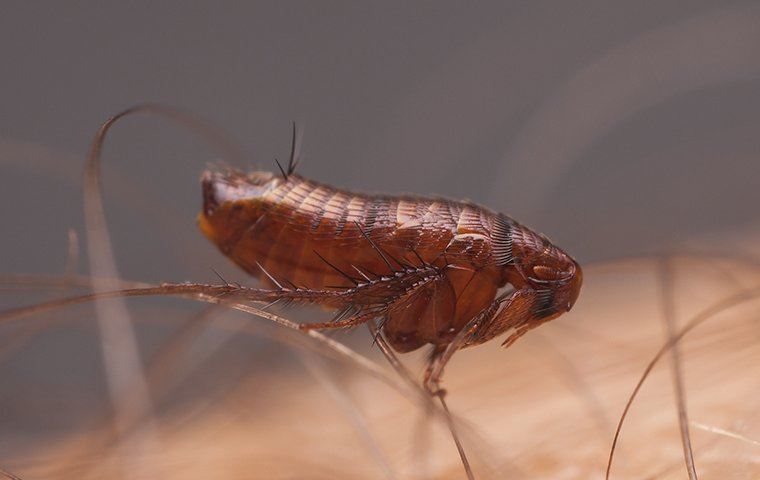
Fleas are tiny, blood-feeding insects that are often mistaken for specks of dirt. In Texas, two flea species can find their way onto our properties — the cat flea and the dog flea. The cat flea is the most widespread and likely culprit of an infestation. The two fleas are quite similar, and you can only tell them apart under the microscope. Despite their descriptive names, both cat and dog fleas feed on similar hosts, including cats, dogs, rodents, and other warm-blooded wild animals. Fleas will bite us and feed on our blood, but we are not their preferred hosts.
The tick is another blood-feeding pest that lives in our area; however, it is not an insect but rather a type of arachnid. Three of the most common ticks in our area are the American dog tick, lone star tick, and black-legged tick. Like fleas, they also feed on warm-blooded animals like our pets, rodents, and wild animals. Ticks are also capable of attaching themselves to people and feeding on our blood.
Both fleas and ticks are considered dangerous because of their ability to spread pathogens and parasites through their feeding process. In the U.S., the spread of diseases by ticks is more of a concern than by fleas. Yet, limiting contact with either species is important to the health and safety of you and your family.
Black-legged ticks are responsible for the spread of Lyme disease. Other diseases spread by various tick species include:
Fleas spread parasitic tapeworms to people and animals and can spread diseases like plague and flea-borne typhus.
Fleas also pose another problem; many people and animals are allergic to their saliva and develop flea bite dermatitis, resulting in a red itchy rash. Scratching at the bites can lead to a secondary infection.
Neither fleas nor ticks can fly; therefore, the easiest way for them to move from place to place is on the back of an animal host. Fleas and ticks are in our yards because our pets, rodents, or other animals have introduced them.
Fleas reproduce on the backs of their animal hosts; their eggs will fall to the ground to develop into new biting adults. Ticks feed for days, and after they have had their fill, they will drop to the ground until they are ready to find a new host.
When fleas or ticks are in your backyard or outdoor space that you regularly frequent, like a walking trail, it is easy to accidentally come into contact with these pests and bring them into your home. Another common way these pests find their way into our homes is on the backs of their animal hosts; when rodents move indoors to nest, they bring fleas and ticks with them.
We guarantee our work. If you see pests, we return at no extra charge.
You'll find fleas and ticks in their highest numbers in outdoor spaces that have things that attract their animal hosts. Having the following items in your yard may lead to problems with fleas and ticks on your property:
Fleas can complete their life cycle indoors, and when introduced into a home, these prolific breeders can quickly create a large-scale infestation.
In contrast, except for a few species, ticks can't complete their life cycle indoors and rarely are a problem in our homes. If you see ticks in your home, it is likely because your pets are bringing them in or a rodent or other animal has found their way inside.
Get rid of fleas and ticks on your property quickly and completely by partnering with us at EnviroGuard Pest Control. We provide long-term pest control solutions through attention to detail, an understanding of the pests local to our area, and by performing effective treatments. Our professionals are dedicated to helping you keep your family safe and your home free of pests throughout the entire year.
To learn more about our flea and tick control services, don't hesitate to call EnviroGuard today.
Prevent issues with fleas and ticks throughout the entire year with the assistance of our most helpful flea and tick prevention tips.
